

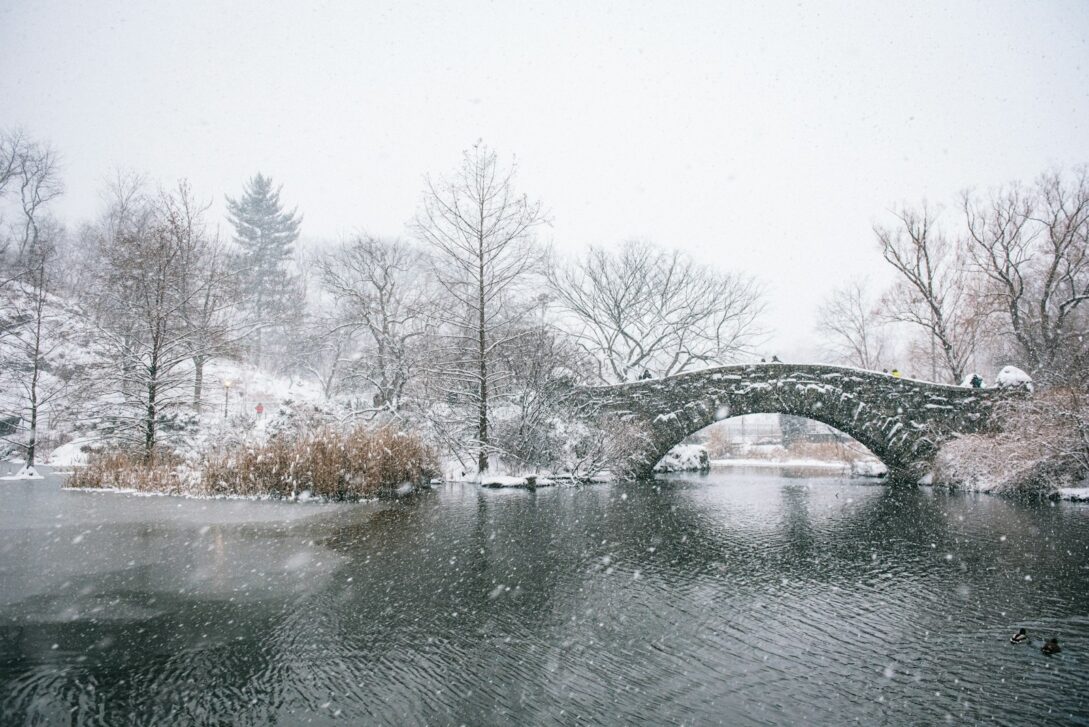
Winter in NYC can mean skating beneath the Manhattan skyline, walking through Central Park on a cold morning, or spending an afternoon in a museum before heading to a Broadway show. But the experience changes considerably between December and February.
December is best for Christmas displays and holiday markets. January is typically the coldest month. February is better suited to winter activities, museums, and neighborhood exploring after most holiday events have ended. Choose your dates based on the experiences you want, not simply the season.
Central Park’s long-term climate normals show monthly mean temperatures of 39.1°F in December, 33.7°F in January, and 35.9°F in February. These are historical averages, not a forecast. Pack warm layers, wear comfortable footwear, and leave room in your itinerary for changing weather.
If you are still deciding when to travel, read our guide to the best time to visit New York City for a broader month-by-month comparison.
Winter in NYC: What Each Month Is Like
Each of the three winter months offers a different reason to visit. Use this comparison to decide which month best matches your plans.
| Month | Average high | Average low | Monthly mean |
|---|---|---|---|
| December | 44.3°F | 33.8°F | 39.1°F |
| January | 39.5°F | 27.9°F | 33.7°F |
| February | 42.2°F | 29.5°F | 35.9°F |
Source: National Weather Service, Central Park 1991–2020 climate normals. These figures are historical averages, not a travel-date forecast.
December: Christmas Displays and Holiday Markets
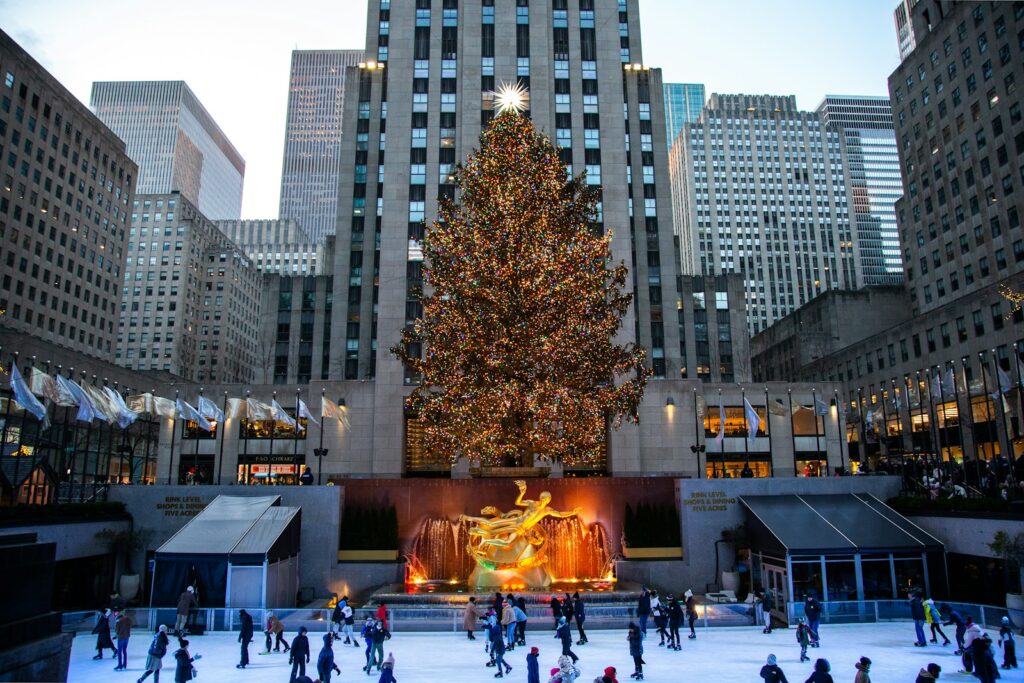
December is the strongest choice if Christmas decorations, seasonal markets, and illuminated attractions are high on your list. Rockefeller Center’s Christmas Tree lighting is scheduled for December 2, 2026, and the tree is expected to remain on view through mid-January 2027.
Other seasonal highlights include Bryant Park’s Holiday Shops, Brooklyn Botanic Garden’s Lightscape and the New York Botanical Garden’s Holiday Train Show. Their published 2026–27 dates run from November into early January, which makes early and mid-December a good window for combining several of them.
December is also a popular travel period. Check event calendars and ticket availability before fixing your itinerary, particularly if you want to attend a specific evening session.
January: The Coldest Month
January has the lowest monthly mean temperature in the climate comparison, at 33.7°F. Expect cold days and nights, and plan outdoor sightseeing around the forecast.
The Christmas season winds down, but some winter attractions continue. Bryant Park’s rink is scheduled to operate through February 28, 2027, and Wollman Rink’s season runs through March 16. Roebling Rink at Brooklyn Bridge Park is scheduled to close on January 31.
January is a good fit if you would rather focus on museums, restaurants, performances, and skating than on Christmas markets. The Rockefeller Center tree is expected to remain on view through mid-January, but check its official page for current visiting information.
February: Winter Activities Without the Christmas Crowds
February remains cold, with a historical monthly mean of 35.9°F. Most Christmas markets and holiday displays have finished, but some skating rinks stay open.
Consider pairing a Central Park walk with a museum visit, exploring Greenwich Village or Chinatown, or spending an evening at a Broadway performance. Snow is possible, but it is not guaranteed on your travel dates. Check the forecast close to departure rather than planning your trip around snowfall.
Best Things to Do in NYC During Winter
The best winter itinerary balances outdoor experiences with indoor places where you can warm up. Here are the seasonal activities and attractions worth considering.
See NYC’s Christmas Displays and Seasonal Attractions
If you are visiting in December or early January, check the dates for these seasonal experiences before booking.
- Rockefeller Center Christmas Tree: The 2026 tree lighting is scheduled for December 2, and the tree is expected to remain on view through mid-January 2027. Visiting the tree is not the same as attending the lighting ceremony. Check the official Rockefeller Center Christmas Tree page.
- Bryant Park Holiday Shops: Scheduled for October 28, 2026, through January 3, 2027. You can browse the outdoor shops without buying anything; food and purchases cost extra. See the Holiday Shops calendar.
- Lightscape at Brooklyn Botanic Garden: Scheduled for November 20, 2026, through January 3, 2027. This ticketed evening trail features illuminated installations. Published adult tickets are $39 off-peak or $44 peak; child tickets for ages 3–11 are $22 or $28, respectively. Children aged 0–2 enter free, and Anytime Entry tickets are listed at $59. See Lightscape.
- New York Botanical Garden Holiday Train Show: Scheduled for November 14, 2026, through January 10, 2027. The exhibition features model trains moving through miniature New York landmarks. Check the official event page for ticket options and schedules.
These events do not all end on the same date. If you are visiting in January, confirm that the specific attraction is still operating.
Go Ice Skating at a New York City Rink
NYC has several seasonal rinks, and their locations and pricing differ.
Wollman Rink — Central Park
Wollman Rink offers a Central Park setting with views of the Manhattan skyline. Its published 2026–27 season runs from October 28, 2026, through March 16, 2027. Admission and skate rentals are priced separately. The rink states that ticket purchases are final and that visitors must sign a waiver. Check Wollman Rink for current prices and booking details.
Bryant Park Winter Village — Midtown
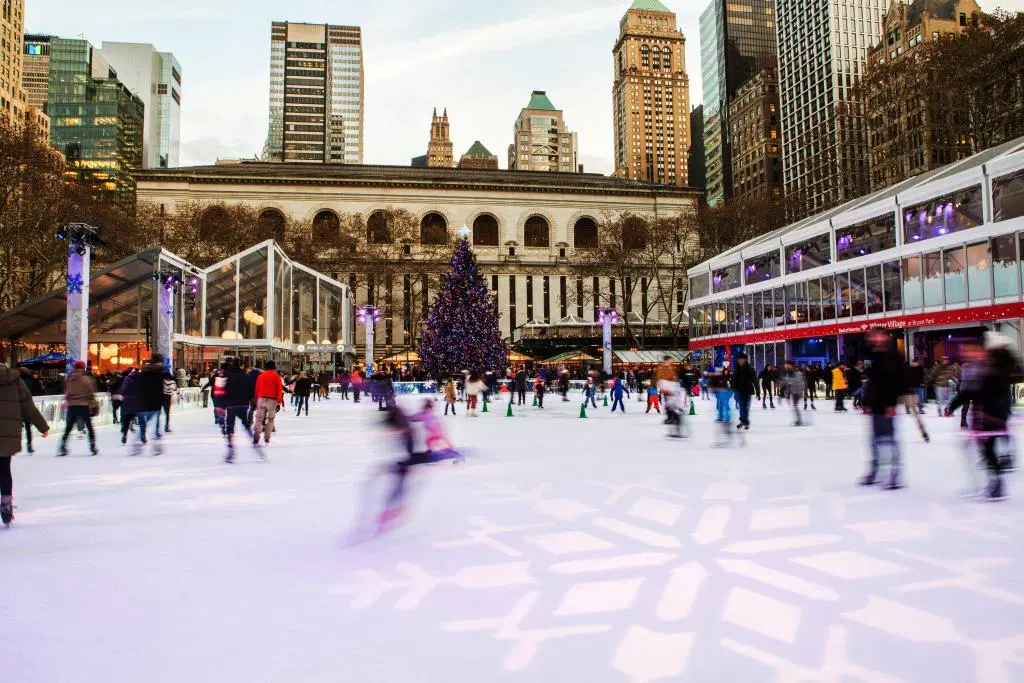
Bryant Park’s rink is scheduled to operate from October 28, 2026, through February 28, 2027. Admission is free if you bring your own skates, but you must reserve a free entry time and show your skates. Rentals are paid; the published rental range is $18.72–$64.48 before tax, including the listed administrative fee. Check the official rink page before visiting.
Roebling Rink — Brooklyn Bridge Park
Roebling Rink offers a skating experience beneath the Brooklyn Bridge, with views of the Manhattan skyline. Its published season runs from November 14, 2026, through January 31, 2027. Listed admission is $20 for non-residents and $16 for NYC residents; skate rentals are $12 and $8 respectively, inclusive of taxes and fees. Check Brooklyn Bridge Park for current information.
If free rink admission matters to you, Bryant Park is the option to consider, provided you already own skates. Choose Wollman for a Central Park setting or Roebling for the Brooklyn Bridge backdrop.
Walk Through Central Park and Enjoy the Winter Views
Central Park is worth visiting even if you don’t plan to skate. Its paths, bridges, and open spaces offer a welcome change of pace from Midtown’s busy streets.
The Central Park Conservancy suggests a winter walk of approximately one mile, taking around an hour, that connects Grand Army Plaza, Gapstow Bridge, Wollman Rink, and Pinebank Arch. You can adapt the route to the weather and the time you have.
For another outdoor perspective, walk across the Brooklyn Bridge or visit Brooklyn Bridge Park for views of Lower Manhattan. Choose a clear day when possible, wear shoes with good traction, and allow time for photographs.
For more outdoor attractions and sightseeing ideas throughout the city, see our guide to the best things to do in New York City.
Visit a Museum on a Cold or Rainy Day
NYC’s museums offer substantial indoor experiences, but admission rules matter, especially for visitors from outside New York.
- The Metropolitan Museum of Art: A broad collection of art and historical objects. Standard admission is listed at $30 for adults, $22 for seniors aged 65 and over, and $17 for students. Children aged 12 and under enter free. Pay-what-you-wish admission applies to New York State residents and students from New York, New Jersey, and Connecticut, not to all tourists. Visitor information.
- Museum of Modern Art (MoMA): A choice for modern and contemporary art. General admission is listed at $30 for adults, $22 for seniors and $17 for students; children aged 16 and under enter free under the museum’s ticket conditions. Free Friday Nights are limited to New York State residents and require advance reservations and proof of eligibility. Visit MoMA.
- American Museum of Natural History: A practical option for families and visitors interested in dinosaurs and natural science. Standard general admission for visitors from outside New York State is listed at $37 for adults and $30 for seniors and students; children enter free. Pay-what-you-wish general admission is for New York State residents with valid ID. Ticketed exhibitions may cost extra. Visitor information.
- National Museum of the American Indian: A genuinely free museum at One Bowling Green in Lower Manhattan. Admission is free for everyone, and no ticket is required. Its listed hours are 10 a.m. to 5 p.m., except December 25. New York visitor information.
Check each museum’s official visitor page before going, as admission rules, exhibitions, and schedules can change.
Explore Neighborhoods, Food and Broadway
You don’t need to spend the whole day hopping between major attractions. Grouping a few indoor stops around one neighborhood can make a cold day much easier.
- Greenwich Village: Explore the neighborhood’s streets and Washington Square Park, then warm up at a café or restaurant. IFC Center offers indoor film screenings, while Comedy Cellar is an option for a comedy performance. Check showtimes and ticket availability.
- Chinatown: Visit the Museum of Chinese in America or stop at Nom Wah Tea Parlor for dim sum. MOCA’s listed adult admission is $15; its pay-what-you-wish option is limited to NYC residents with accepted proof of residency. Check its visitor information.
- Upper West Side: Pair the American Museum of Natural History or New York Historical with a stop at Zabar’s, a neighborhood food destination where you can browse or buy something to eat.
- Chelsea Market: This indoor food market in the Meatpacking District is useful for a meal or a break while exploring the nearby area. Entry and browsing are free; food and shopping are paid. Check Chelsea Market for vendor information.
If you are planning to stay near these attractions, our guide to where to stay in New York City can help you compare neighborhoods.
For an evening indoors, consider a Broadway show. Productions such as The Lion King and Wicked are examples, but performance dates and ticket prices vary. Check the show’s official ticketing information for your travel dates, and review age recommendations if you are visiting with children.
Free Things to Do in NYC During Winter
You can enjoy plenty of NYC without paying for every attraction. Start with public spaces and free-admission venues, then check eligibility carefully before relying on museum discounts.
- Walk through Central Park: Explore its paths, bridges, and open spaces. The Central Park Conservancy’s suggested winter route is approximately one mile and takes around an hour.
- Visit Washington Square Park: A free public-space stop while exploring Greenwich Village.
- Walk across the Brooklyn Bridge: Enjoy the city views without paying an admission fee. Check conditions and wear footwear with good traction.
- Explore Brooklyn Bridge Park: The waterfront offers views of the bridge and Lower Manhattan. Individual events or areas may have separate costs or temporary closures.
- Visit the National Museum of the American Indian: Admission is free for everyone, with no ticket required.
- Browse Bryant Park’s Holiday Shops: Browsing is free during the market’s operating season; purchases and food cost extra.
- Walk through Chelsea Market: You can enter and browse without buying food.
Some other museum offers are not free for every visitor. The Met’s pay-what-you-wish policy is limited to eligible residents and students; MoMA’s free Friday Nights are for New York State residents with reservations; and the American Museum of Natural History’s pay-what-you-wish general admission is for New York State residents with valid ID. Check the rules before including these offers in your budget.
Bryant Park’s skating rink also offers free admission if you bring your own skates and reserve an entry time. Skate rentals are paid.
What to Wear in NYC During Winter
Plan for cold temperatures, wind, and the possibility of wet or icy conditions. Layers are more practical than a single heavy item, especially when you move between outdoor streets and heated indoor attractions.
Pack:
- A thermal or moisture-wicking base layer.
- A fleece or wool middle layer.
- An insulated outer coat that protects against wind and light rain.
- Comfortable pants, with thermal leggings if needed.
- Waterproof boots or shoes with rubber soles and good traction.
- Warm socks, plus a spare pair.
- A hat that covers your ears, gloves or mittens, and a scarf.
Choose footwear for walking, not just appearance. You may spend long periods outdoors, and wet or icy sidewalks can make smooth-soled shoes uncomfortable. Check the forecast shortly before departure and adjust your packing accordingly.
Planning Your Winter Trip to NYC
A little flexibility can keep weather and seasonal schedules from disrupting your plans.
Check transport before setting out. Public transportation is often more practical than driving in winter weather, but subway and bus services can still be affected by severe conditions. Check MTA service updates before traveling, and allow extra time if snow or freezing weather is expected. NYC’s Notify NYC service also provides public alerts.
Plan outdoor activities around daylight. Consider visiting Central Park, bridges, and waterfront areas earlier in the day. Save museums and other indoor attractions for colder or darker hours, then schedule performances or seasonal lights for the evening.
Confirm dates and the full cost before booking. Check official venue pages for operating dates, opening hours, ticket prices, timed-entry requirements, holiday closures, and weather or cancellation policies. Don’t assume every rink or outdoor event follows the same refund rules.
Keep an indoor alternative. If a day depends on an outdoor activity, have a nearby museum, food hall, or performance in mind in case rain, snow, or wind changes your plans.
For a more manageable activity budget, combine free public spaces and genuinely free attractions with a smaller number of paid highlights. Remember that equipment rentals, special exhibitions, food and timed-entry tickets can add to the cost.
If you want to organize the main attractions into a short trip, use our 3-day NYC itinerary as a starting point and adjust it for winter opening dates and weather.
Frequently Asked Questions About Winter in NYC
Which month is coldest in NYC?
January is the coldest of the three winter months in the National Weather Service’s Central Park 1991–2020 climate normals. Its average high is 39.5°F, and its average low is 27.9°F.
Does it snow in NYC in December?
Snow is possible in December, but it is not guaranteed during a particular visit. Check the forecast close to your travel dates.
Is NYC worth visiting in January?
Yes, if you are comfortable with cold weather and are more interested in museums, performances, restaurants, and winter activities than Christmas markets. Some skating rinks remain open in January.
Are there free things to do in NYC in winter?
Yes. You can explore Central Park, Washington Square Park and the Brooklyn Bridge, visit the National Museum of the American Indian for free, and browse places such as Chelsea Market and Bryant Park’s Holiday Shops without making a purchase. Some museum discounts are restricted to local residents or eligible students.
What should I pack for NYC in winter?
Bring an insulated coat, warm layers, gloves, a hat, a scarf, warm socks, and comfortable footwear with good traction. Waterproof boots are useful when wet or icy conditions are expected.
How many days do you need in NYC during winter?
Three to five days is a useful starting point for a first visit. Three days gives you time for the major sights and a couple of indoor attractions, while five days allows more flexibility for museums, neighborhoods, seasonal events, and changes in the weather.
Planning note: Seasonal event dates, ticket prices, opening hours, and admission rules can change. Recheck official venue information before booking or traveling.